Mastering 3-Color Chrome & Black Throw-Ups in Under 4 Minutes
Advertisements
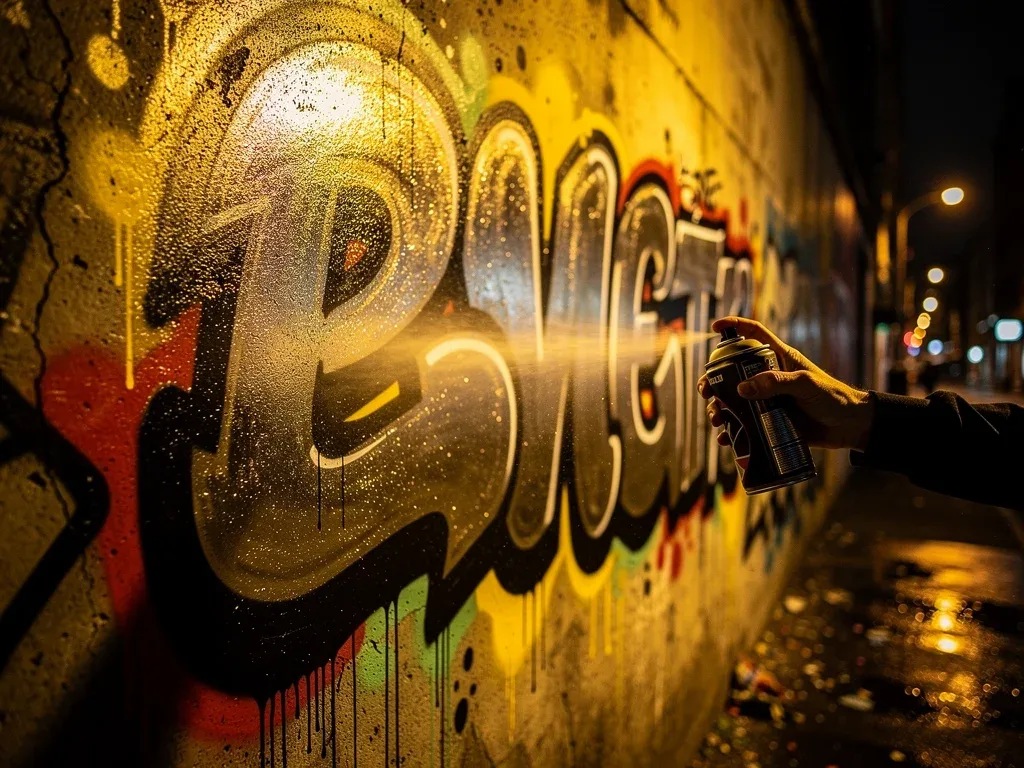
Graffiti spray control combines precision, consistency, and practiced movement to help artists produce cleaner lettering, fills, outlines, and multi-color compositions on legal walls and practice surfaces.
Techniques such as valve control, cap selection, muscle memory, layering, and pre-visualization can improve both speed and quality without sacrificing artistic intention.
This guide explores how artists can develop those skills through structured practice, equipment familiarity, and deliberate repetition in authorized environments.
Why Speed and Control Matter in Graffiti Practice
Speed can be useful in legal graffiti practice because it encourages confidence, flow, and efficient decision-making. The goal is not simply to work faster, but to maintain quality while reducing hesitation.
Artists who practice timed exercises often become more comfortable with large gestures, transitions, and repeated letterforms. This can improve consistency across larger compositions.
When combined with graffiti spray control, speed becomes a measure of technical fluency rather than a substitute for quality or planning.
Understanding Valve Control: The Core of Precision
Valve control is one of the foundations of graffiti spray control. Small changes in finger pressure, can angle, and distance can alter line width, paint density, and edge definition.
Experienced artists learn to adjust these variables almost automatically. This helps them maintain consistent paint flow across different surfaces and can pressures.
Controlled valve pressure is especially important when combining metallic colors, dark outlines, and secondary accent tones in multi-color pieces.
The Science of Spray Patterns
Different caps produce different spray patterns, making cap selection an important technical decision. Fine caps are useful for detail, while wider caps provide faster coverage.
The artist's distance from the surface also affects the result. Closer passes generally create sharper lines, while greater distance produces softer and wider spray patterns.
Fat Caps: Useful for broad fills and larger outlines.
Skinny Caps: Better suited to fine lines, details, and sharper edges.
Soft Caps: Provide softer transitions and moderate coverage.
Practicing each cap on cardboard, plywood, or a legal wall helps artists understand how pressure and motion change the final mark.
Muscle Memory Protocols: Automating Artistic Flow
Muscle memory helps artists repeat shapes and movements with greater confidence. In graffiti, this is especially useful for letter structures, outlines, curves, and fill patterns.
Repeated practice allows the body to perform familiar motions without requiring constant conscious correction. This creates smoother movement and more consistent line quality.
Developing muscle memory is a major part of improving graffiti spray control. The goal is to make fundamental movements reliable before increasing complexity or speed.
Drills for Rapid Execution
Structured drills can help reinforce common movements used in graffiti lettering. Repetition should prioritize consistency first and speed second.
Artists can practice the same letterform, curve, or outline several times on a legal practice surface. Comparing each repetition makes weaknesses easier to identify.
Letter Repetition: Repeat the same shape to improve consistency.
Outline Practice: Train smooth, uninterrupted line movement.
Fill Exercises: Practice even coverage without excessive overlap or drips.
These drills build control gradually and help artists develop cleaner results when working on larger or more complex pieces.
The Chrome Challenge: Achieving Luster and Depth
Chrome paint behaves differently from many standard colors because metallic pigments reflect light. Consistent application is important for avoiding dull or patchy areas.
Even passes and controlled overlap can help produce a more uniform metallic appearance. Surface preparation also affects how reflective the final result appears.
Strong graffiti spray control makes it easier to combine chrome with black outlines and contrasting accent colors without muddying the composition.
Layering and Blending Techniques
Layering determines how colors interact visually. Artists usually plan the order of fills, accents, and outlines before beginning the final piece.
Lighter or reflective colors may require a clean base, while darker tones can provide separation and structure. Testing combinations beforehand can prevent unwanted color interaction.
Blending should be practiced slowly before being incorporated into faster work. Controlled transitions are more effective when artists understand how each paint behaves.
Strategic Planning: Design and Execution Workflow
Efficient mural execution begins before painting starts. A clear plan reduces unnecessary corrections and helps artists maintain visual consistency across the piece.
Pre-visualizing color order, major shapes, and outline placement can make the painting process more fluid. Quick sketches are useful for testing composition.
Planning supports better graffiti spray control because artists can focus on execution instead of making every creative decision during painting.
Pre-Visualization and Sketching
Thumbnail sketches help artists explore different layouts quickly. They can also reveal proportion problems before those issues appear on a larger surface.
Color tests are useful when combining chrome, black, and additional tones. Testing small areas can show how contrast and reflectivity will behave.
Thumbnail Sketches: Explore multiple layouts quickly.
Color Palettes: Test combinations before committing to a full piece.
Outline Practice: Rehearse major contours before painting.
This preparation reduces hesitation and allows artists to work more confidently once they move to the final authorized surface.
Environmental Adaptation: Responding to Variables
Different surfaces can change how paint behaves. Porous concrete, smooth metal, brick, and primed walls may require different distances and paint application methods.
Temperature, humidity, and wind can also affect spray behavior and drying time. Legal outdoor mural work often requires artists to adapt technique to these conditions.
Testing a small area before painting the full piece can help determine how the surface responds and improve overall graffiti spray control.
The Role of Equipment Maintenance and Selection
Reliable equipment helps artists maintain consistent line quality and paint flow. Clean caps and properly functioning valves reduce interruptions during practice or mural work.
Artists often keep several cap types available because different sections of a piece require different spray widths. Matching the cap to the task improves efficiency.
Regularly checking equipment supports stronger graffiti spray control and helps prevent inconsistent lines caused by clogged or damaged components.
Community and Peer Learning: Sharing Techniques
Graffiti communities have long played an important role in artistic development. Artists often improve by observing others, exchanging techniques, and discussing materials.
Mentorship, workshops, legal jams, and online communities can introduce artists to new approaches to lettering, color, and spray technique.
Sharing knowledge helps develop stronger technical standards while encouraging experimentation and personal style within legal creative spaces.
Key Technique | Brief Description |
|---|---|
Valve Control | Precise manipulation of spray pressure for consistent lines and fills. |
Muscle Memory | Repetitive practice that improves consistency and movement fluency. |
Chrome Application | Controlled layering for an even metallic appearance. |
Strategic Planning | Pre-visualization and workflow preparation for efficient mural execution. |
Frequently Asked Questions About Graffiti Spray Control
What is the most important skill for improving spray technique?▼
Consistent valve control is one of the most important foundations. It helps artists manage line width, paint density, and edge quality across different types of work.
How long does it take to develop muscle memory?▼
There is no fixed timeline. Consistent repetition over weeks and months usually produces noticeable improvement, while advanced fluency may take years of practice.
Which spray caps are useful for practice?▼
Fat caps are useful for broad coverage, skinny caps for detail, and soft caps for moderate spray patterns. Practicing with several types helps develop adaptability.
What role does preparation play in painting efficiently?▼
Sketching, color testing, and planning the sequence of major elements reduces hesitation and makes the painting process more organized.
How do environmental factors affect spray painting?▼
Surface texture, wind, temperature, and humidity can change paint behavior. Testing the surface and adjusting distance or pressure can help maintain consistency.
Perspectives
Improving graffiti spray control is ultimately about repetition, observation, and understanding how tools respond. Technical confidence develops through structured practice rather than shortcuts.
Artists can continue refining these skills through authorized mural projects, practice boards, workshops, and collaborative sessions within the graffiti art community.
Future developments in paint formulations, cap design, and training methods may make technique even more precise. Resources on graffiti art can also provide broader context on the evolution of the medium.