Minimalist Streetwear: 10-Piece Capsule Wardrobe for 5 Years
Advertisements
Building a minimalist streetwear capsule wardrobe for five years is best treated as a durability goal rather than a guarantee.
Choosing versatile designs, examining construction, maintaining garments carefully, and repairing them when necessary can increase the chances that a small wardrobe remains useful for years.
How to Build a Minimalist Streetwear Capsule Wardrobe is less about buying expensive basics and more about selecting pieces you will repeatedly wear, maintain, and repair.
Advertisements
Capsule wardrobes remain relevant in 2026 because versatility, utility dressing, relaxed silhouettes, layering, and durable-looking workwear influences continue to appear across contemporary menswear and streetwear.
A five-year wardrobe is therefore an achievable personal target for some garments, but actual lifespan depends on construction, fit, frequency of wear, care practices, damage, and changing needs.
The Core Philosophy of a Durable Streetwear Capsule
The concept of a minimalist streetwear capsule focuses on owning fewer pieces that can work together across multiple outfits and situations.
Versatility is central to the approach because a small wardrobe only works when most tops, bottoms, shoes, and outerwear can be combined without extensive planning.
Durability adds another requirement: pieces should remain physically usable and personally desirable enough that the owner actually wants to keep wearing them.
Strategic Selection: Quality Over Quantity
Buying fewer garments can support a longer-lasting wardrobe, but a higher price or premium label does not automatically indicate stronger construction or longer life.
Recent durability research emphasizes testing characteristics such as abrasion resistance, seam strength, pilling, shrinkage, fading, and dimensional stability rather than relying only on fiber type.
Before buying, examine stitching, fabric feel, reinforcement, hardware, fit, repairability, and care requirements alongside the material composition shown on the label.
Identifying High-Quality Materials for Longevity
Heavyweight cotton can provide a substantial feel for tees and sweatshirts, but fabric weight alone cannot guarantee that a garment will resist fading, distortion, pilling, or seam failure.
Merino wool offers useful temperature-regulating and odor-management properties for layering, although knit quality, abrasion, pilling, moth damage, and care still affect longevity.
Technical fabrics and denim should likewise be judged by their actual specifications and construction because neither synthetic performance materials nor raw or selvedge denim automatically last longer.
- Heavyweight Cotton: Useful for structured tees and sweatshirts, but inspect stitching, shrinkage behavior, and overall construction.
- Merino Wool: Effective for breathable layering when the garment’s knit and care requirements match your lifestyle.
- Technical Fabrics: Check the manufacturer’s actual waterproof, wind-resistant, breathable, and care specifications instead of assuming performance from appearance.
- Denim: Choose fabric weight, construction, fit, and finishing based on intended use rather than assuming raw or selvedge denim is inherently more durable.
Timeless Minimalist Streetwear Aesthetics: Beyond Trends
A five-year capsule benefits from pieces that do not depend entirely on one seasonal microtrend, although there is no universal definition of what will remain stylish.
Neutral colors, straightforward shapes, utility influences, relaxed trousers, simple outerwear, and adaptable basics can provide a flexible foundation for streetwear outfits.
Personal preference matters just as much as conventional timelessness because a garment that no longer feels enjoyable is unlikely to remain in active use for years.
Key Elements of Timeless Minimalist Streetwear Design
A limited palette can make mixing pieces easier, but black, white, gray, navy, and olive are suggestions rather than mandatory capsule-wardrobe colors.
Classic or relaxed silhouettes can work well, while 2026 menswear also shows continued interest in loose cargo trousers, utility details, layering, and individualized styling.
Minimal branding can make garments easier to combine, although longevity ultimately depends more on whether the wearer continues enjoying the design.
- Neutral Color Palette: Use compatible colors that allow most pieces to work together.
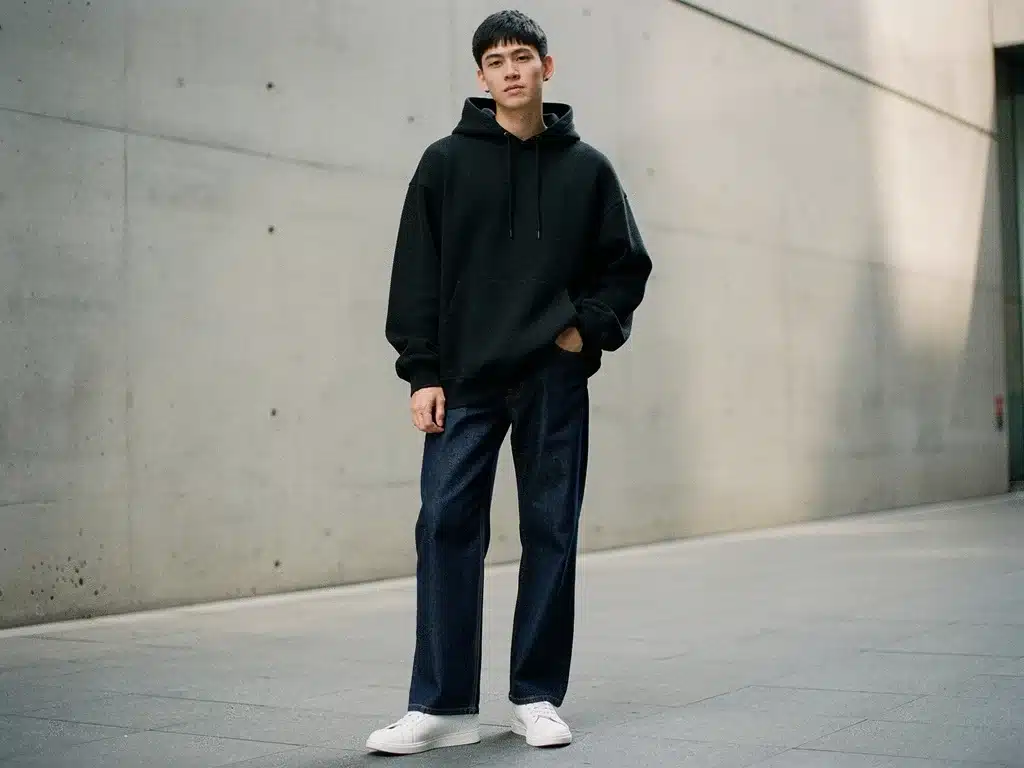
- Classic Silhouettes: Consider straight or relaxed trousers, simple hoodies, crewneck tees, and adaptable jackets.
- Minimal Branding: Subtle graphics can reduce dependence on a specific branding moment while leaving room for personal taste.
The 10-Piece Blueprint: Essential Categories
A strict 10-piece capsule requires clearer limits than broad ranges that can accidentally produce a wardrobe containing nine, eleven, or twelve items.
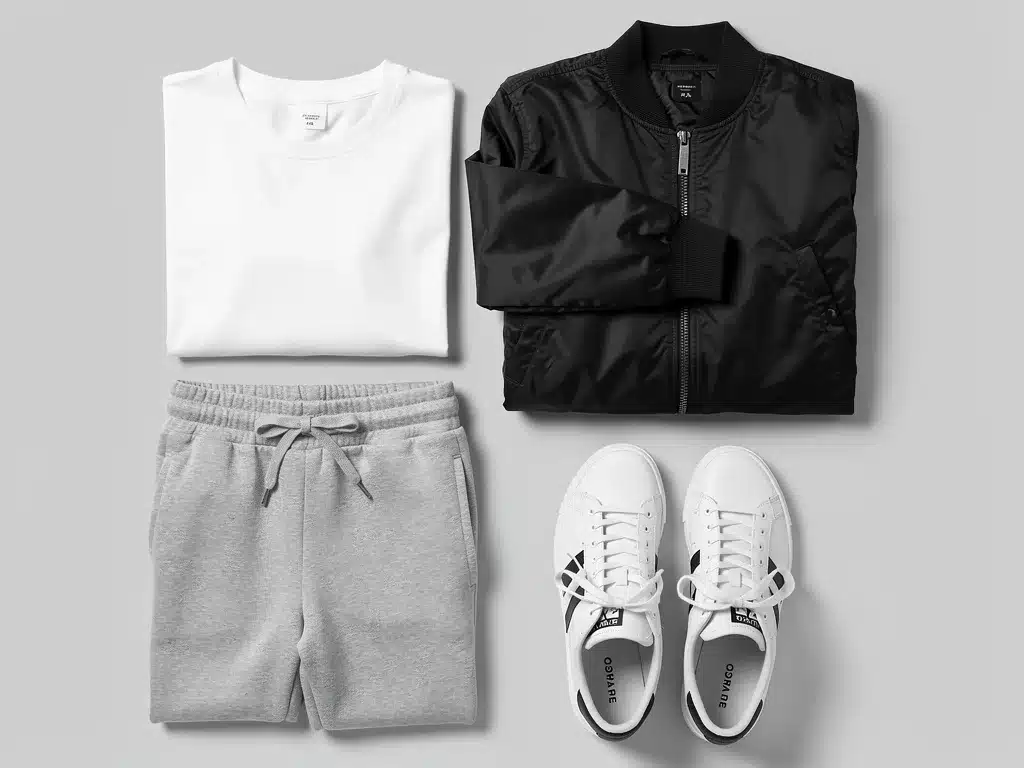
One practical framework is three tops, one outerwear piece, three bottoms, two pairs of shoes, and one accessory, creating exactly 10 pieces.
The formula should still be adapted for climate and lifestyle because someone in Minnesota will need different outerwear from someone living in Southern California.
Defining Your Essential 10 Pieces
Start with three tops that layer easily, then add one outerwear piece capable of working with all three and three bottoms suited to your normal activities.
Two footwear options provide rotation and weather flexibility, while one accessory can add personality or practical utility without expanding the capsule significantly.
If accessories are not counted in your personal definition of a capsule, substitute another layer or jacket while keeping the overall total at 10.
- Tops (3 pieces): 2 basic t-shirts and 1 long-sleeve tee or simple crewneck sweatshirt.
- Outerwear (1 piece): A bomber, denim jacket, overshirt, or clean utility jacket suited to your climate.
- Bottoms (3 pieces): 1 pair of jeans, 1 dark trouser, and 1 cargo or other versatile casual pant.
- Footwear (2 pieces): 1 versatile sneaker and 1 weather-appropriate sneaker or boot.
- Accessories (1 piece): A cap, beanie, tote, or similarly useful finishing item.
Versatility and Layering: Maximizing Your Wardrobe
The practical value of a small capsule depends on how many useful combinations its individual garments can create without making every outfit feel identical.
Layering increases flexibility by allowing the same tee, sweatshirt, jacket, and trousers to function differently as temperatures and settings change.
Testing combinations before buying is useful because theoretical versatility means little if proportions, colors, or fabrics do not work together when actually worn.
Strategies for Enhanced Versatility
Choose colors that can be combined across most of the capsule rather than purchasing individual statement pieces that only work with one outfit.
Check layering physically whenever possible, making sure a jacket accommodates the sweatshirt and that tees fit comfortably under the intended outer layers.
Versatility should reflect your actual schedule, since a wardrobe designed for school, commuting, creative work, nightlife, or outdoor use may require different pieces.
- Interchangeable Colors: Build a palette in which most tops and bottoms can be worn together.
- Layering Potential: Make sure pieces physically fit over or beneath one another without uncomfortable bulk.
- Multi-Occasion Suitability: Prioritize garments that genuinely match the places you regularly go.
Maintenance and Care: Extending Garment Lifespan
Garment care plays a major role in longevity because repeated washing, drying, abrasion, stains, and improper storage can gradually change fabrics and construction.
Care should begin with the manufacturer’s label because different fibers, dyes, coatings, membranes, and trims can require different washing and drying methods.
Repairing loose seams, damaged hems, missing buttons, or small tears early can also prevent minor problems from developing into reasons to discard a garment.
Essential Garment Care Practices
Washing only when genuinely needed can reduce unnecessary laundering, while cooler and gentler cycles may be appropriate for many garments when permitted by the care label.
Air drying can reduce exposure to tumble-dryer heat for compatible garments, but the correct method depends on fiber type and manufacturer instructions.
Storage matters as well: some knitwear is better folded, while structured jackets generally benefit from appropriate hangers and enough space to maintain their shape.
- Follow Wash Labels: Treat the garment’s care label as the primary instruction for cleaning and drying.
- Gentle Washing: Use lower temperatures and gentler cycles when appropriate for the garment.
- Air Drying: Consider air drying when the care instructions permit it and the garment can dry properly.
- Proper Storage: Store each material in a way that limits stretching, moisture, pests, and unnecessary deformation.
Integrating Personal Style: Making It Yours
While a minimalist streetwear capsule benefits from coordination, it should still reflect what the wearer genuinely enjoys.
Emotional durability matters because clothing is more likely to remain in use when people continue valuing its appearance, fit, comfort, and personal significance.
A practical capsule therefore balances interchangeable basics with enough individuality to prevent the wardrobe from feeling like an imposed uniform.
Infusing Individuality into Your Capsule
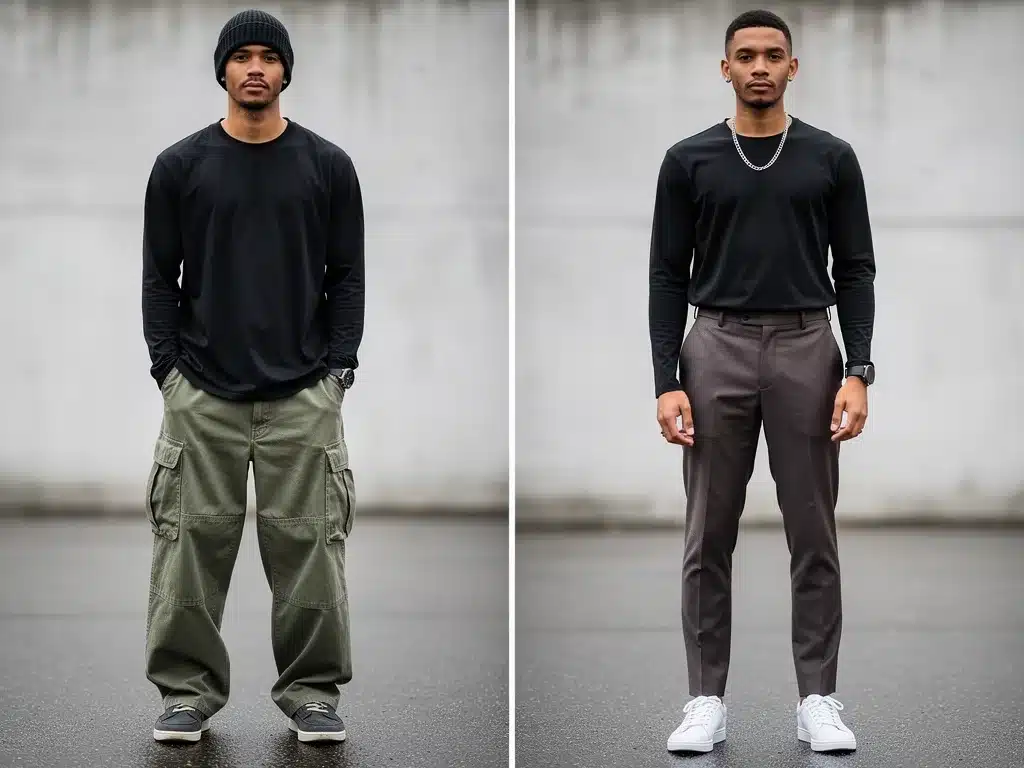
Fit is one of the easiest ways to personalize a limited wardrobe, whether your preference is oversized, straight, cropped, relaxed, or more tailored.
Texture can also create variety through denim, fleece, canvas, ripstop, wool, jersey, or other materials without requiring multiple competing colors.
A small number of accessories can change the visual emphasis of repeated combinations while keeping the core clothing selection compact.
- Signature Fits: Choose proportions that you already enjoy rather than buying a shape solely because it is currently trending.
- Texture Play: Mix compatible textures such as denim, fleece, cotton jersey, canvas, or ripstop.
- Subtle Accessories: Use jewelry, socks, caps, bags, or similar details to vary repeated outfits.
The Long-Term Impact: Sustainability and Savings
A smaller wardrobe can reduce purchasing and replacement when garments are genuinely worn for longer, but buying fewer premium pieces is not automatically sustainable.
WRAP’s durability research emphasizes extending active garment life because keeping clothing in use longer can reduce the environmental impacts associated with replacement and new production.
The strongest sustainability case therefore comes from buying fewer pieces, wearing them frequently, maintaining them, repairing damage, and keeping them in active use.
Financial savings are also possible but not guaranteed, because expensive garments only represent better value when their added cost is justified by actual use and lifespan.
Repair and resale are gaining more industry attention in 2026, with major fashion organizations calling for policies that make circular business models easier to scale in the United States and elsewhere.
A durable capsule is therefore best viewed as a long-term use strategy rather than a promise that premium clothes will automatically save money or remain environmentally superior for five years.
| Key Aspect | Description |
|---|---|
| Quality Materials | Evaluate fabric together with stitching, finishing, abrasion resistance, fit, and overall construction. |
| Timeless Design | Choose versatile designs you expect to enjoy wearing beyond one seasonal trend. |
| Versatility & Layering | Select compatible pieces that can create multiple useful combinations across your lifestyle and climate. |
| Proper Care | Follow care labels, avoid unnecessary washing, store garments appropriately, and repair damage early. |
Frequently Asked Questions About Minimalist Streetwear
A minimalist streetwear capsule is a deliberately limited collection of compatible garments built around versatility and repeated use. There is no official number of pieces, and 10 is simply one practical framework.
Ten pieces create a clear constraint that encourages thoughtful selection, while five years provides a useful longevity goal. Neither number guarantees sustainability, savings, or garment durability.
A practical 10-piece version can include three tops, one jacket, three bottoms, two footwear options, and one accessory, adjusted according to climate and lifestyle.
No design is guaranteed to remain fashionable for five years. Choosing garments you personally enjoy, avoiding dependence on short-lived trends, and using adaptable colors and silhouettes can improve long-term wearability.
It can work across seasons in moderate climates with effective layering. Regions with extreme heat, cold, rain, or snow may require additional seasonal footwear, outerwear, or technical layers beyond a strict 10-piece capsule.
What This Means
Building a minimalist streetwear capsule for five years reflects growing interest in versatility, durability, repair, and keeping garments in active use longer.
The strongest 2026 evidence does not support simple rules such as “premium equals durable”; recent durability research instead emphasizes measurable construction and performance characteristics.
For minimalist streetwear fashion, the practical takeaway is to buy fewer pieces you genuinely wear, care for them correctly, repair them when possible, and replace them only when necessary.