Deadstock Footwear Value Drop: 18% Decline Across Resale Platforms
Advertisements
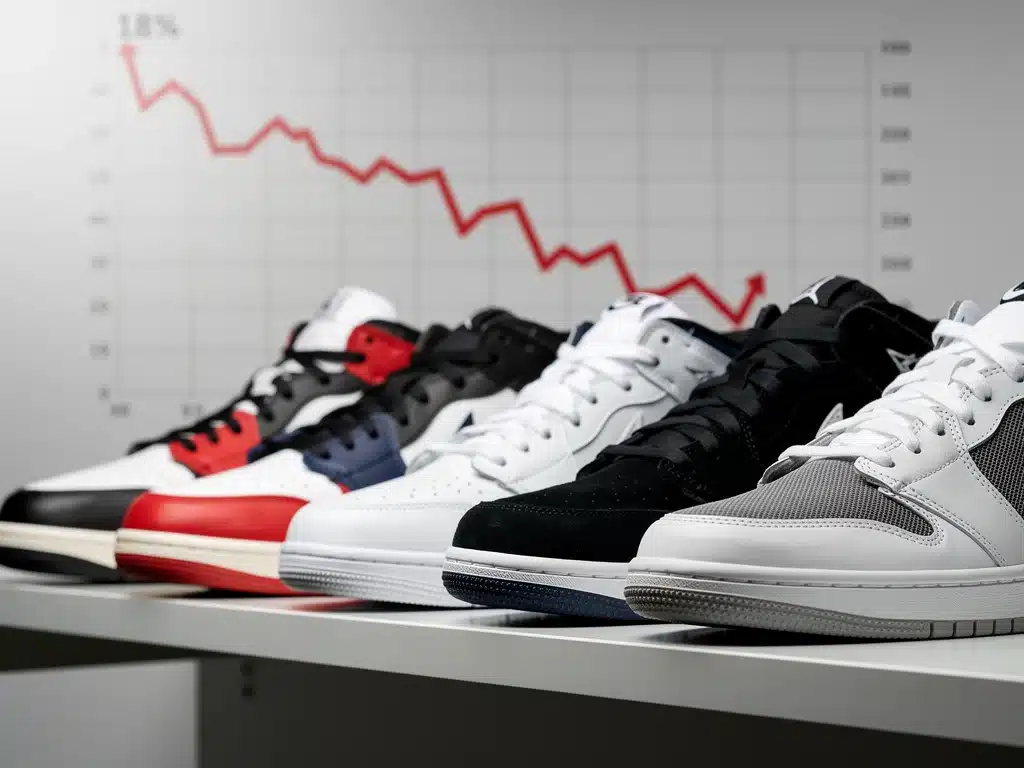
Latest developments on Deadstock Footwear in 2026 show a resale market that is becoming more selective rather than experiencing one uniform decline.
Many recent releases now trade below retail, while scarce collaborations, selected retro models, and fast-growing brands continue to command premiums.
The secondary sneaker market has changed considerably from the period when limited releases could frequently be purchased at retail and resold quickly at large premiums.
Advertisements
Current 2026 data shows weaker resale performance across a large share of recent releases, but price movements differ substantially by brand, silhouette, size, scarcity, and release.
For collectors and sellers, the key development is therefore not a verified market-wide 18% collapse, but a shift toward greater selectivity and less predictable resale premiums within the broader streetwear market.
What the Current Deadstock Footwear Data Actually Shows
A broad 2026 dataset tracking 3,538 sneaker releases from 31 brands found that 59.5% of releases from the previous two years were most recently trading below their original retail price.
The median release in that dataset was approximately 10.6% below retail as of August 18, 2026, showing how difficult routine resale profitability has become for many general releases.
Those figures describe a large sample of recent shoes rather than proving that the entire Deadstock Footwear market has declined by one fixed percentage.
Why the 18% Figure Needs Caution
Different marketplaces use different inventories, transaction histories, fees, product conditions, sizes, and methodologies, making one universal percentage difficult to establish.
A decline in a particular index, brand, portfolio, or group of releases should not automatically be described as the performance of all deadstock footwear.
Current evidence supports describing the market as fragmented, with many weak releases alongside products that continue to appreciate or maintain strong premiums.
More Recent Releases Are Trading Below Retail
The most important change for casual resellers is the growing number of releases that fail to generate an immediate resale premium.
In the 2026 cross-platform dataset, Jordan was particularly exposed, with 70.7% of the tracked Jordan releases trading below retail and a median position approximately 20% below retail.
This does not mean every Jordan loses value, because individual retro releases and scarce collaborations can behave very differently from broader general-release inventory.
Retail Price Is No Longer a Reliable Resale Floor
Buying a sneaker at retail does not guarantee that another buyer will later pay the same amount on a secondary marketplace.
When supply exceeds immediate resale demand, sellers may need to accept a price below retail even before marketplace fees, shipping, and taxes are considered.
This makes the purchase price only one component of the seller’s economics rather than a guaranteed minimum resale value.
Supply and Scarcity Still Matter
Sneaker resale premiums remain closely connected to the relationship between supply and demand, although exact production numbers are often unavailable publicly.
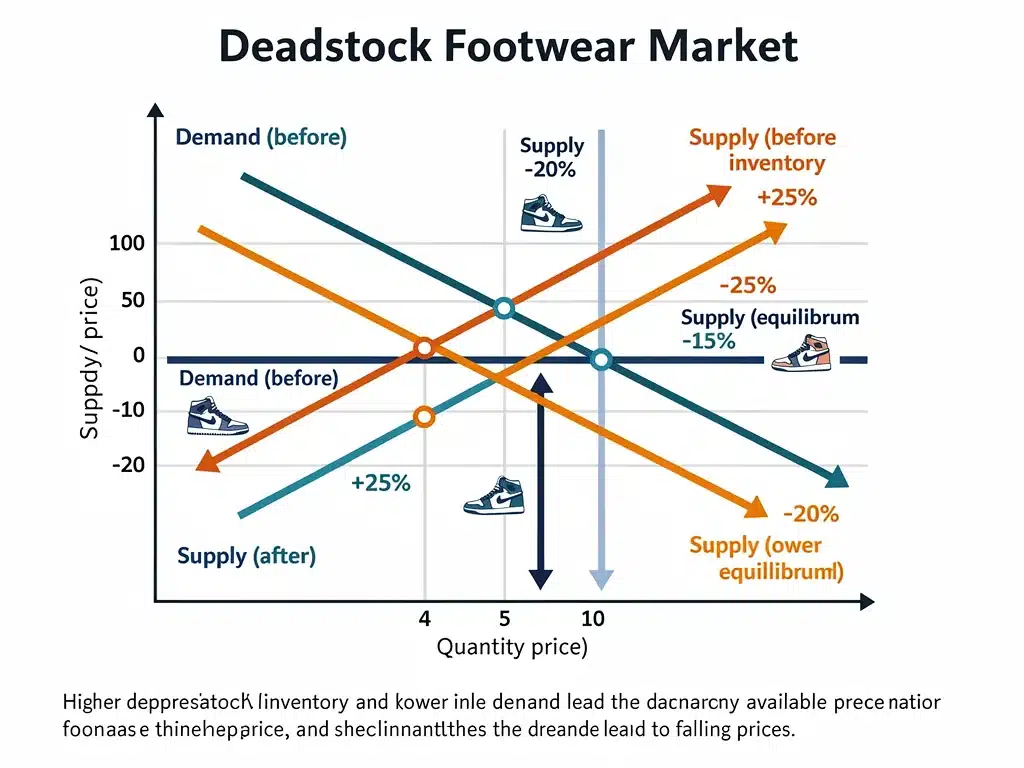
When a release is widely available, repeatedly restocked, or produced in quantities sufficient to satisfy demand, buyers generally have less reason to pay a large secondary-market premium.
By contrast, genuinely scarce products with sustained demand can continue to trade substantially above retail even in a softer overall environment.
Do Brands Intentionally Increase Supply to Reduce Resale?
Brands do sometimes expand distribution or production for popular franchises, but the specific motivation behind production decisions is rarely disclosed in enough detail to establish that reducing resale prices is the goal.
Higher availability can nevertheless reduce scarcity regardless of the manufacturer’s intention, particularly when several similar colorways or versions reach the market within a short period.
It is therefore safer to evaluate observable supply and availability rather than speculate about why a brand selected a particular production volume.
- Wider availability can reduce scarcity premiums.
- Frequent releases can divide demand across similar products.
- True scarcity can still support strong resale pricing when buyer demand remains high.
The Market Is Not Declining Equally Across Brands
StockX data from the first half of 2026 demonstrates how uneven the resale market has become across brands and product categories.
Saucony sneaker sales increased 239% year over year on the platform, while Vans increased 238%, showing that consumer demand has shifted toward different silhouettes rather than simply disappearing.
Jordan also showed signs of recovery, with sneaker sales increasing 6% and average prices rising approximately 5% compared with the same period previously.
Vans Shows Why Broad Market Averages Can Mislead
StockX reported that Vans’ average resale price increased from approximately $102 to $180 during the comparison period.
The brand’s average price premium also increased from roughly 12% above retail to 69%, supported by demand for selected products and the broader skate revival.
This performance directly illustrates why a single market-wide decline figure cannot describe every brand or sneaker category accurately.
Demand Is Moving Toward Different Silhouettes
Secondary-market demand changes as fashion preferences move between basketball shoes, retro runners, slim sneakers, skate footwear, technical runners, and other styles.
Products that performed strongly during one hype cycle may weaken when consumers redirect attention toward different silhouettes.
That rotation can create falling resale prices for one group of sneakers while another category experiences stronger transaction volume or higher premiums.
Hype Does Not Guarantee Long-Term Demand
A collaboration, celebrity association, or highly visible launch can create intense demand around release day without guaranteeing sustained secondary-market pricing.
Once the initial attention fades, resale value depends on continuing demand relative to the number of pairs available.
This makes cultural relevance important but insufficient by itself to predict the long-term value of a sneaker.
The Idea of “Sneaker Fatigue”
The term “sneaker fatigue” is sometimes used to describe reduced enthusiasm caused by a high frequency of releases, collaborations, and similar product variations.
It is difficult to measure as one standardized market indicator, so it should be treated as an interpretation of changing consumer behaviour rather than a proven cause of every price decline.
Transaction data provides stronger evidence when it shows demand shifting between brands, silhouettes, and categories over time.
- Retro runners and technical footwear have gained attention in recent resale cycles.
- Skate-inspired footwear has shown renewed momentum in 2026.
- Sustainability may influence some purchasing decisions but is not a universal driver of sneaker resale prices.
Economic Conditions Can Affect Discretionary Spending
Collectible footwear competes with many other forms of discretionary spending, so household finances can affect how much consumers are willing to pay above retail.
Interest rates, employment conditions, inflation, household debt, and consumer confidence can all influence discretionary purchases, although isolating their precise effect on sneaker prices is difficult.
Economic conditions should therefore be considered alongside sneaker-specific factors such as scarcity, fashion cycles, release calendars, and buyer demand.
Price Sensitivity Becomes More Important
When buyers become more price-conscious, highly available sneakers may have difficulty sustaining significant secondary-market premiums.
Collectors may instead wait for prices to decline, purchase at retail during restocks, or consider used pairs when condition is acceptable.
This increases pressure on sellers holding inventory purchased with the expectation of immediate appreciation.
Used Sneakers Are Becoming More Visible on Major Platforms
An important development in 2026 is the growing integration of used footwear into marketplaces traditionally associated with new authenticated sneakers.
StockX launched StockX Listings in June 2026 for used sneakers, vintage apparel, accessories, and other items, expanding the range of condition options available to shoppers.
Early sales data showed thousands of transactions across nearly 3,000 unique products and approximately 200 brands.
Used Pairs Can Create Additional Price Competition
StockX reported that the top-selling sneakers on its new Listings marketplace were priced approximately 24% to 31% below the average price of the equivalent brand-new pair on its verified marketplace.
For buyers primarily interested in wearing a shoe rather than owning an unworn collectible, that price difference can make used inventory attractive.
For Deadstock Footwear sellers, an expanding used market creates another price reference that may influence what consumers are willing to spend.
Platform Data Gives Buyers More Pricing Information
Modern resale platforms display recent sale histories, current asks, bids, and other information that can help users evaluate whether a listed price reflects recent transactions.
This transparency does not necessarily push prices downward by itself, because strong transaction data can also reinforce the premium of a genuinely scarce product.
It does, however, make it easier for buyers and sellers to compare current market conditions rather than relying exclusively on anecdotal hype.
Fees Affect Seller Profitability
The final sale price does not equal the seller’s profit because platforms can charge transaction, payment-processing, shipping, or other applicable fees.
Taxes and the seller’s original purchase costs can also materially change the economics of a resale transaction.
A sneaker selling above retail can therefore still produce a small profit or even a loss after all transaction costs are considered.
What the Shift Means for Collectors
A softer market for many recent releases can provide collectors with opportunities to buy pairs closer to or below their original retail prices.
Someone purchasing primarily because they enjoy the design may benefit from reduced competition and less pressure to buy immediately after release.
Collectors should still avoid assuming that falling prices will necessarily recover because future demand for individual sneakers remains uncertain.
Deadstock Footwear Condition Still Matters
Deadstock Footwear generally refers to an unworn pair, although marketplace definitions and packaging requirements can vary.
New condition can command a premium compared with used Deadstock Footwear because collectors may place value on unworn materials, original packaging, accessories, and presentation.
That premium is not fixed, and the difference between new and used pricing depends heavily on the sneaker and available inventory.
What the Shift Means for Resellers
The current environment makes indiscriminate purchasing of every limited or highly promoted release more difficult to justify as a resale strategy.
Sellers increasingly need to understand the specific model, size, purchase price, marketplace fees, transaction volume, and available supply before estimating a margin.
No release should be treated as a guaranteed flip because secondary-market demand can change rapidly after the original purchase.
Inventory Risk Matters More in a Selective Market
Holding inventory creates opportunity cost because capital remains tied up while the seller waits for a suitable transaction.
If prices decline during that period, the seller may eventually need to accept a lower margin or a loss to release that capital.
This makes inventory turnover and total transaction cost just as important as the headline resale premium.
- Track completed sales rather than relying only on asking prices.
- Include marketplace fees when calculating potential margins.
- Avoid assuming that past performance of a silhouette predicts the next release.
Rare Does Not Automatically Mean Profitable
Scarcity supports resale value only when enough buyers actually want the product.
A sneaker can have very limited production yet still struggle to command a premium when awareness or demand is weak.
The strongest resale prices generally require both constrained supply and persistent demand rather than rarity alone.
Resale Value and Brand Perception
Secondary-market prices can provide one indicator of consumer interest, but they should not be treated as a complete measurement of brand health.
A brand may intentionally prioritize retail availability and sell large quantities even when aftermarket premiums remain modest.
Conversely, high resale prices for a few products do not necessarily mean that every release from the brand is commercially successful.
Accessibility and Exclusivity Can Coexist
Major Deadstock Footwear companies operate across mass-market products, limited collaborations, premium models, and highly scarce releases simultaneously.
These different strategies can serve different customer groups without requiring every sneaker to maintain an aftermarket premium.
Evaluating a brand therefore requires separating primary retail performance from activity on resale platforms.
There Is No Single U.S. Deadstock Footwear Price Trend
Pricing can vary by platform, sneaker size, geographic availability, release timing, transaction fees, and the number of buyers competing for the product.
Even within the United States, one size of the same sneaker can trade at a materially different price from another because supply and demand differ by size.
Claims about regional declines should therefore be supported by platform-specific regional data rather than inferred from global averages.
Size Can Materially Affect Resale Prices

Rare sizes may sometimes command different premiums because the number of available pairs and interested buyers differs from mainstream sizes.
The relationship is not consistent across every sneaker, making individual transaction data more useful than a general rule about large or small sizes.
Collectors and sellers should compare the exact model and size they own rather than relying solely on an overall average price.
What the 2026 Data Says About the Market
The clearest evidence is that the sneaker resale market has become more selective rather than disappearing.
Many recent releases trade below retail, while selected brands and releases are simultaneously recording strong sales growth and rising average prices.
This environment rewards product-specific analysis far more than broad assumptions that every Deadstock Footwear sneaker is appreciating or depreciating together.
| 2026 Market Indicator | What the Available Data Shows |
|---|---|
| Recent Releases Below Retail | 59.5% of 3,538 tracked releases from the previous two years were below retail in one cross-platform dataset. |
| Median Recent Release | Approximately 10.6% below retail in the same dataset as of August 18, 2026. |
| Jordan on StockX | H1 2026 sales rose 6% year over year and average prices increased approximately 5%. |
| Saucony on StockX | Sales increased 239% in H1 2026 compared with H1 2025. |
| Used vs. New | Top-selling used sneakers on StockX Listings were approximately 24% to 31% cheaper than equivalent brand-new pairs. |
Frequently Asked Questions About Deadstock Footwear
No reliable public dataset located for this analysis establishes a universal 18% decline across StockX, GOAT, eBay, and other major marketplaces. Available 2026 data instead shows substantial variation across brands and releases.
In one August 2026 dataset covering 3,538 releases across StockX, GOAT, and eBay, 59.5% of releases from the previous two years were most recently trading below retail.
No. StockX data shows strong growth for selected brands in 2026, including Saucony and Vans, while Jordan also recorded higher sales and average prices in the first half of the year.
Yes. Scarce collaborations, desirable retros, unusual sizes, and releases with persistent demand can still trade at substantial premiums, but those outcomes are highly product-specific.
Resale prices are volatile and depend on demand, supply, condition, size, platform fees, and cultural relevance. Future appreciation is not guaranteed, so collectible footwear should not be treated as a predictable investment return.
What This Means
The Deadstock Footwear market in 2026 is better described as increasingly selective than as experiencing one universal 18% decline across the entire streetwear resale ecosystem.
Many recent releases now trade below retail, but official StockX data also shows substantial growth and rising prices for selected brands, demonstrating that demand has shifted rather than disappeared.
Collectors and sellers should therefore evaluate individual products using completed transaction prices, supply, size, condition, marketplace costs, and current demand instead of relying on broad claims about guaranteed appreciation or a single market-wide decline.