Blackbook to Brick: Grid & Doodle-Grid Scaling for 40-Foot Walls
Advertisements
From Blackbook to Brick Scaling helps mural artists transfer small sketches onto 40-foot walls using traditional grids, doodle-grid techniques, and digital tools. Learn how to calculate proportions, prepare surfaces, and maintain accuracy while preserving your artistic style.
From Blackbook to Brick Scaling transforms compact graffiti sketches into impressive wall murals through careful measurements, visual references, and practical transfer techniques.
Expanding a blackbook drawing onto a 40-foot surface requires more than artistic confidence. Accurate proportions, suitable equipment, and thoughtful planning help prevent distortion.
Whether you prefer a traditional grid or a flexible doodle-grid approach, understanding both methods can simplify large-scale projects. This guide explains each technique step by step.
Mastering the Transfer: From Sketch to Monumental Wall
Moving a detailed blackbook sketch onto a large wall introduces challenges involving scale, perspective, and surface texture. Small drawing errors become more noticeable when enlarged.
A successful transfer begins with evaluating the original composition and measuring the available painting area. These details establish the relationship between the sketch and wall.
Artists can then choose a scaling technique that matches their design and preferred working style. Both traditional grids and doodle grids offer reliable visual guidance.
Understanding the Scaling Process
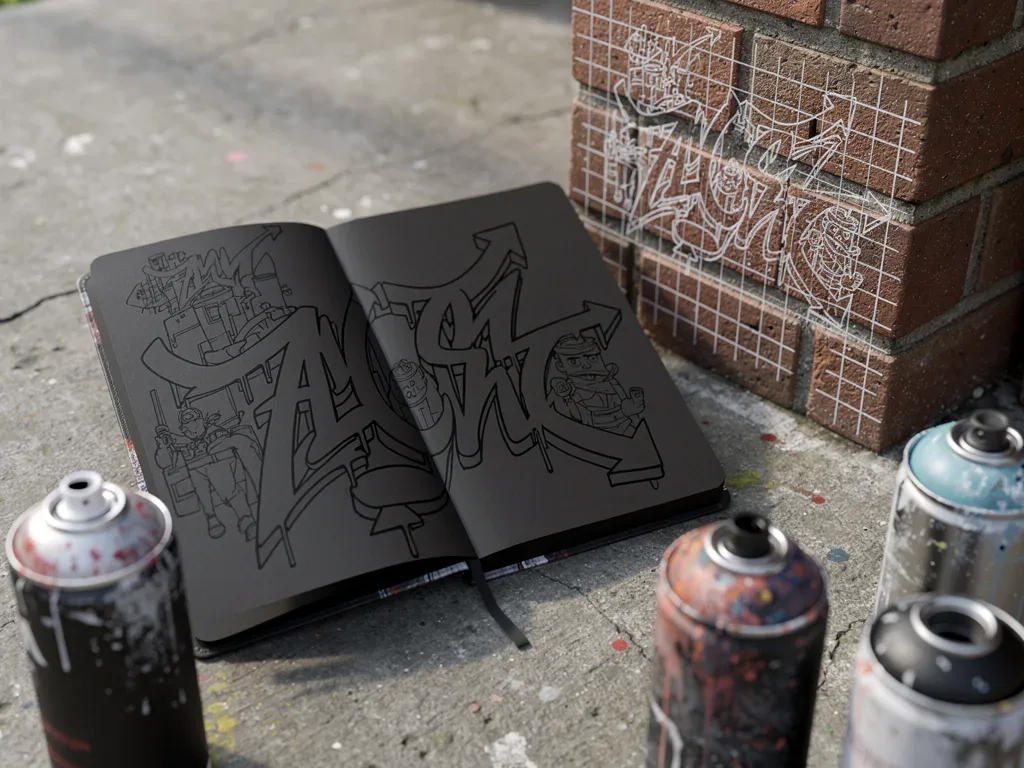
Scaling means enlarging a design while preserving its intended proportions. The relationship between the sketch dimensions and the wall determines how much each element expands.
For example, a 10-inch-wide drawing enlarged to cover a 40-foot-wide wall requires a scale factor of 48. Each original inch represents four feet.
This calculation assumes the available wall has proportions compatible with the design. Otherwise, artists must adjust the composition or leave appropriate margins.
Preparing Your Blackbook Design
Before transferring artwork, identify the main letters, characters, outlines, and background elements. Separating these components makes the enlargement process easier to manage.
Mark important reference points such as the centerline, major curves, and boundaries of individual shapes. These landmarks help maintain consistent proportions across the mural.
If the sketch contains intricate details, consider simplifying elements that may become difficult to reproduce. Large murals must remain readable from their intended viewing distance.
The Core of Grid Scaling: Precision and Proportion
Traditional grid scaling divides a drawing into equal sections that correspond to larger sections on the wall. This method provides clear references for transferring shapes.
Instead of reproducing the entire artwork at once, artists focus on individual squares. Each section becomes a manageable part of the complete composition.
The technique works particularly well for complex lettering, detailed characters, and compositions requiring accurate positioning. Its effectiveness depends on consistent measurements and careful alignment.
Setting Up Your Grid System
Begin by measuring the width and height of the blackbook sketch. Next, measure the wall area available for the finished mural.
Determine the scaling ratio and divide both surfaces into matching sections. Each square on the drawing must correspond to a proportionally larger wall section.
Use temporary markings to identify grid boundaries without permanently affecting the surface. Verify horizontal and vertical alignment before transferring the artwork.
Calculating the Correct Grid Size
Suppose your blackbook design measures 10 inches wide and the wall measures 40 feet. Converting the wall width to inches gives 480 inches.
Dividing 480 by 10 produces a scaling factor of 48. Therefore, a one-inch section in the sketch corresponds to 48 inches on the wall.
A sketch divided into ten equal columns would require ten corresponding wall columns, each four feet wide. Matching proportions prevents unwanted stretching.
Transferring the Design Square by Square
Once the grid is ready, identify where important outlines cross each square boundary. These intersection points provide reliable references for drawing larger shapes.
Start with the main contours before adding interior details. Working from larger forms toward smaller elements helps maintain consistency throughout the composition.
Step away from the wall regularly to inspect the overall design. Viewing the mural from a distance makes proportional errors easier to identify.
Doodle-Grid: Flexibility Meets Structure
The doodle-grid method offers an alternative to carefully measured squares. Instead of building a conventional grid, artists create recognizable reference marks across the wall.
These marks might include random symbols, short lines, numbers, or simple doodles. Their positions become visual landmarks for transferring the design.
This approach can be especially useful for expressive graffiti styles where flexibility and rapid visual alignment are important during large-scale painting.
Applying the Doodle-Grid Method
Start by creating temporary, easily recognizable marks across the authorized painting surface. Distribute them widely enough to provide useful references throughout the composition.
Take a clear photograph of the wall from a suitable viewpoint. The photograph should show the complete working area and its reference marks.
Using an image editor, overlay your design onto the photograph at the intended scale. The visible doodles help identify where corresponding outlines belong.
Using Reference Marks Effectively
Choose marks that are easy to distinguish from one another. Repeating identical symbols throughout the wall can make visual positioning more difficult.
Different shapes, colors, or combinations of lines provide recognizable landmarks. Their primary purpose is to connect locations in the digital reference with the physical surface.
As you paint, compare the actual wall with the composite reference image. This allows large shapes to be positioned accurately without measuring every section.
When to Choose Doodle-Grid Instead of Grid Scaling
Doodle-grid works well for artists comfortable interpreting photographic references and drawing freehand. It can reduce the preparation needed for a conventional measured grid.
Traditional grid scaling may be preferable when exact dimensions or highly structured geometric designs are essential. Each method serves different artistic and technical needs.
Some artists combine both approaches by establishing a few measured reference lines and adding doodles elsewhere. This creates flexibility while retaining important proportional controls.
Tools and Materials for Large-Scale Transfers
Successful From Blackbook to Brick Scaling depends on selecting equipment suited to the wall, painting method, and working environment. Accuracy begins with reliable preparation tools.
Measuring tapes, levels, temporary marking materials, and photographic references help establish the design. Painting equipment should be appropriate for the wall surface.
Safety equipment is equally important, especially when working at height or using spray paint. The required precautions depend on the project and working conditions.
Essential Measuring Equipment
A long measuring tape helps establish the painting area's dimensions, while a suitable laser level can assist with horizontal and vertical alignment.
Chalk lines and temporary markers provide reference points without requiring permanent outlines. Choose marking products compatible with the surface and planned paint system.
For detailed projects, record measurements before beginning the transfer. A written layout reduces confusion when several artists collaborate on the same mural.
Choosing Temporary Marking Materials
Temporary markings should remain visible during the initial layout but should not interfere with later paint layers. Compatibility is particularly important on porous brick.
Some chalks, pencils, and water-removable products behave differently depending on surface texture. Test them on a small, inconspicuous area before widespread use.
Avoid assuming every removable marker will wash away completely. Residue and staining can affect the final appearance, especially with lighter paint colors.
Safety Equipment for Large Murals
Large murals may require access equipment when sections cannot be reached safely from ground level. Appropriate scaffolding or lifts should be selected and operated correctly.
Spray painting also requires attention to ventilation, product instructions, and suitable protective equipment. Respiratory protection must match the substances and exposure conditions involved.
Never improvise elevated platforms or rely on unstable ladders for extensive painting. Follow applicable workplace safety requirements and use qualified personnel where necessary.
Overcoming Challenges on 40-Foot Walls
A 40-foot wall introduces practical difficulties that may not appear when drawing in a blackbook. Surface texture, weather, visibility, and access affect painting accuracy.
Brick joints and irregular surfaces can distort reference lines, while strong wind complicates spray application. Recognizing these conditions early helps avoid unnecessary rework.
Planning should include alternative working dates, suitable equipment, and realistic preparation time. Large-scale artwork benefits from flexibility throughout the painting process.
Working With Uneven Brick Surfaces
Brick surfaces contain mortar joints, texture variations, and occasional irregularities. These characteristics can make straight reference lines appear inconsistent when viewed closely.
Establish the composition using the wall's overall dimensions rather than treating every brick as identical. Reference points should remain consistent across the complete surface.
Photograph the wall before painting to identify potential obstacles. This also helps determine where important lettering or character details might cross difficult areas.
Managing Weather and Outdoor Conditions
Outdoor painting depends on suitable temperature, humidity, and wind conditions. These factors can influence paint application, adhesion, drying, and overall working safety.
Check the manufacturer's instructions for acceptable environmental conditions before starting. Avoid painting when the forecast suggests unsuitable weather or unsafe access conditions.
Protect equipment and materials from unexpected weather changes. Scheduling additional preparation time can prevent rushed decisions that compromise the finished mural.
Correcting Proportional Errors
Small mistakes may become noticeable when viewed from across a street or open space. Regular distance checks help identify inconsistencies before additional layers are applied.
Compare major elements with the original sketch and verify their placement against established reference points. Correct large shapes before refining interior details.
If an element appears distorted, reassess the surrounding proportions rather than changing one isolated line. Maintaining relationships between shapes usually produces better results.
Integrating Digital Tools for Enhanced Scaling
Digital technology can simplify several stages of From Blackbook to Brick Scaling. Photography, image editing, and projection offer useful ways to plan compositions.
These tools allow artists to preview the artwork before applying paint. Adjustments to placement, scale, and visual balance can therefore happen earlier.
Digital assistance does not eliminate the need for manual painting skills. Instead, it provides additional reference information that can improve planning and execution.
Using Projectors and Software
A suitable projector can display a design directly onto a wall under appropriate lighting conditions. Artists can then establish temporary outlines based on the projected image.
Projection works best when the equipment is positioned and calibrated carefully. Bright daylight, obstructions, and perspective distortion may limit accuracy.
Image-editing software also allows artists to combine a wall photograph with a digital sketch. This provides a useful preview before painting begins.
Creating a Digital Wall Mockup
Photograph the wall from a viewpoint that captures its full dimensions. Whenever possible, minimize perspective distortion by keeping the camera aligned with the surface.
Import the photograph into an image editor and position the artwork over it. Adjust the design until the composition fits the available area.
Save the mockup as a reference for the painting process. Additional versions can show individual outlines, lettering, color sections, or important landmarks.
Combining Digital and Traditional Methods
Digital mockups can complement measured grids by showing how the composition should appear on the actual surface. This helps connect numerical measurements with visual decisions.
Artists may use a digital preview to establish important boundaries before transferring details manually. The approach can reduce uncertainty during the initial stages.
The best workflow depends on artistic preferences, available equipment, and project complexity. Combining techniques often provides greater flexibility than relying on one method.
The Artistic Freedom Within Structure
Scaling techniques provide guidance without determining every artistic decision. Their purpose is to preserve useful proportions while allowing the artist to interpret the design.
Large murals often require adjustments to fit wall texture, viewing distance, and environmental conditions. These changes can become part of the creative process.
Mastering From Blackbook to Brick Scaling means understanding when accuracy matters and when flexibility improves the artwork. Both qualities contribute to effective mural design.
Balancing Precision and Expression
Precise reference points help preserve the original structure, while freehand adjustments introduce movement and personality. These approaches work together rather than competing.
Once the major outlines are established, artists can refine edges, textures, color transitions, and other details. The finished work may evolve beyond the initial blackbook sketch.
Maintaining artistic freedom requires understanding which elements define the composition. Protecting those relationships allows experimentation without losing the intended visual impact.
Preserving Graffiti Lettering Styles
Large lettering designs rely on consistent relationships between individual characters, outlines, and negative spaces. Scaling errors can make letters difficult to read or visually unbalanced.
Establish the overall lettering structure before applying complex fills and decorative effects. This makes it easier to preserve the sketch's rhythm at larger dimensions.
Artists can then adjust highlights, shadows, and color transitions to suit the wall. These refinements should reinforce the composition rather than obscure its main forms.
Collaborating on Large-Scale Projects
Large murals may involve several artists working simultaneously on different sections. Shared reference materials help maintain consistency when the project is divided among participants.
Clearly establish the design dimensions, main color areas, and boundaries before assigning tasks. This reduces misunderstandings and prevents conflicting adjustments during painting.
Regular visual checks help connect the separate sections into one composition. Collaborative planning can improve efficiency while preserving individual contributions to the artwork.
Future Trends in Large-Scale Graffiti Art
Large-scale mural production continues to benefit from evolving digital tools and more accessible planning techniques. Artists can experiment with different ways to enlarge their designs.
Projection systems, digital illustration software, and photographic references support preparation for complex wall compositions. Their usefulness depends on proper setup and practical experience.
The future of graffiti art will likely combine established painting skills with new visualization methods. Traditional techniques remain valuable alongside technological developments.
Augmented Reality and Digital Visualization
Augmented reality tools can help artists preview designs over images or views of physical spaces. This offers possibilities for experimenting with proportions before painting.
However, preview accuracy depends on camera alignment, device capabilities, and the application's calibration. Digital overlays should not replace essential physical measurements.
As these tools develop, they may become more practical for mural planning. Artists should still verify dimensions and surface conditions before beginning physical work.
More Accessible Mural Planning Techniques
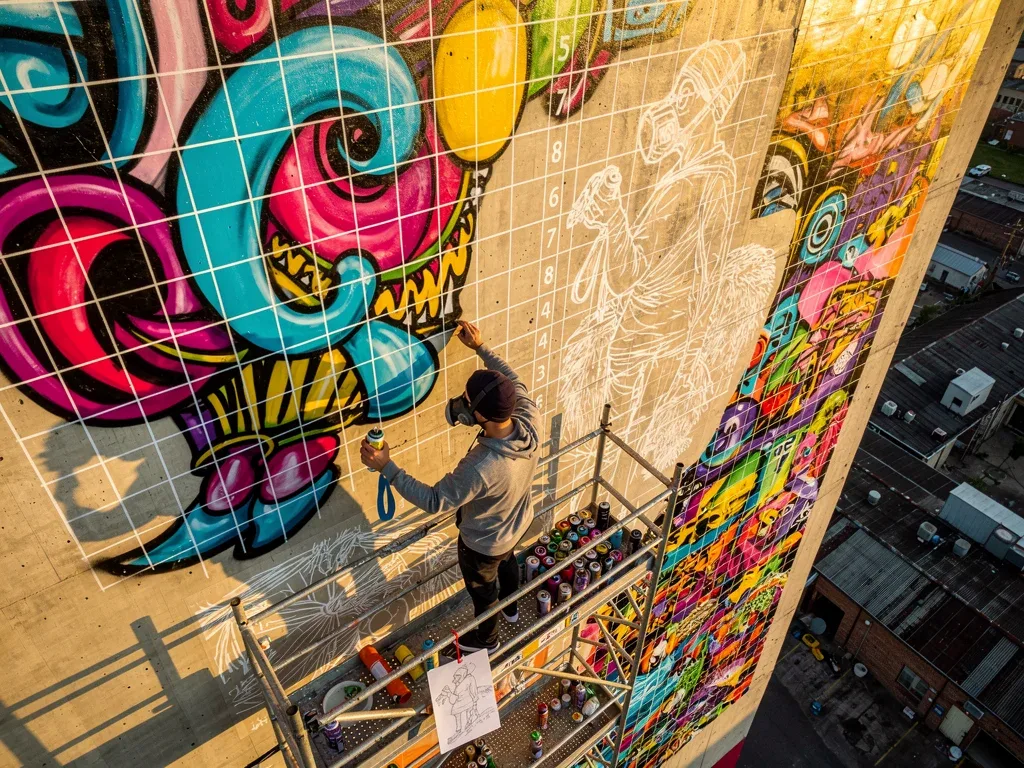
Digital photography and widely available editing tools have made visual planning more accessible. Artists can prepare references without relying exclusively on specialized equipment.
Traditional grid scaling also remains attractive because it requires relatively simple materials. Doodle-grid provides another option for artists comfortable with photographic reference points.
Choosing accessible tools allows more attention to be directed toward composition and execution. The most effective technique is the one that suits the project.
Grid and Doodle-Grid Scaling: Key Takeaways
Understanding the differences between scaling methods helps artists choose suitable techniques for large murals. Each approach offers distinct advantages depending on design complexity.
Traditional grids prioritize measured proportions, while doodle-grid uses recognizable marks and photographic references. Digital tools can supplement either approach when appropriate.
The following table summarizes the main concepts involved in From Blackbook to Brick Scaling. These principles provide a practical foundation for planning ambitious wall projects.
Key Point | Brief Description |
|---|---|
Grid Scaling | Transfers a design proportionally using corresponding measured sections on the sketch and wall. |
Doodle-Grid | Uses temporary wall doodles and photographic references to position artwork without a conventional square grid. |
Digital Integration | Combines photography, image-editing software, or projection to support accurate mural planning. |
Overcoming Challenges | Requires preparation for uneven surfaces, weather, safe access, and proportional corrections. |
Frequently Asked Questions About Large-Scale Graffiti Scaling
What is the primary benefit of using a grid system for large murals?
A grid system provides proportional reference points for transferring small drawings onto larger walls. Dividing the composition into corresponding sections helps artists reproduce major shapes accurately and identify mistakes before completing the mural.
How does a doodle-grid differ from a traditional grid?
A doodle-grid uses recognizable marks drawn across a wall and a photographic reference to guide artwork placement. Unlike a traditional grid, it does not require evenly measured squares and allows greater flexibility during transfer.
What are essential tools for scaling designs to a 40-foot wall?
Useful tools include measuring tapes, laser levels, temporary marking materials, photographs, and digital design software. Large projects may also require properly selected access equipment and protective gear suited to the working conditions.
Can digital tools replace traditional scaling methods entirely?
Digital projectors and editing software can simplify planning and initial artwork transfer, but their usefulness depends on lighting, alignment, and equipment. Physical measurements and manual painting skills remain important for accurate execution.
How do artists maintain artistic freedom when using strict scaling techniques?
Artists use scaling methods to establish the composition's main proportions while leaving room for creative decisions. Color application, line quality, texture, and controlled adjustments allow individual style to emerge during painting.
Perspectives: From Blackbook to Brick Scaling
From Blackbook to Brick Scaling provides practical techniques for transforming small designs into large murals. Traditional grids and doodle-grid approaches offer different forms of visual guidance.
Successful projects depend on accurate preparation, suitable equipment, and safe working conditions. Digital tools can improve planning, but artistic judgment remains central to the process.
By developing confidence with proportional transfer and large-scale composition, artists can approach ambitious mural projects more effectively. The strongest results combine technical preparation with creative expression.